There are a lot of recipes here on the forums if you look around *licks chops* You can find more than enough hearty simple repeatable dishes just here.
What is most interesting, pickled cucumbers like in Poland are difficult to buy in Western Europe. I found a replacement and sometimes when I'm on vacation I buy pickled large green olives, just like today.
Polish cuisine before WW2 was different than today. It relied mostly on local products instead of foreign ones and took bigger advantage of wild nature.
According to statistics, the average resident of Poland in 1929 ate over 18 kg of meat per year, and today it is an average of about 60 kg. The proportions of this consumption were also different. First of all, more beef, veal and lamb were eaten . Pork, for years considered an inferior and less tasty type of meat, appeared on the tables less often. In addition to the poultry species known to us, exquisite capons and poulards (castrated and specially fattened chickens whose meat had a unique, delicate taste) were also prepared, as well as pigeons, guinea fowl and even peacocks. Rabbits, hares, game and wild birds were also eaten more often - ducks, geese, pheasants and partridges, as well as black grouse, wood grouse and... waxwings.
It relied mostly on local products instead of foreign ones
Amasing info on frog consumption in pre war Poland: In the interwar period, people also ate a lot of fish, including the then famous "postal herring" , so called because of the way it reached Poland from Holland, and crayfish, which are rare on our tables today, but were once quite common, served not only in elegant establishments, but also in peasant cottages. The menu also included... frogs, which - as Maria Ochorowicz-Monatowa wrote in her impressive Universal Cookbook - "are tastiest at the end of summer. You can get them at markets already prepared, i.e. skinned". In addition, pre-war recipes include not only commonly used chicken eggs, but also duck, goose, guinea fowl eggs , and also eggs of wild birds - lapwings, seagulls or pheasants - taken from nests in spring.
Let us add that Jerusalem artichoke, scorzonera, cardoons, salsify or kale - considered today as an original addition - are not at all a recent discovery, but were already among the commonly used vegetables before the war. Asparagus, artichokes and capers were also known, and were a very popular ingredient in pre-war cuisine, used, for example, in the sauce for Königsberg steaks.
Many recipes also used olives, parmesan, pistachios or chestnuts , associated with southern Europe , from which soups, purées and desserts were prepared. Of course, groats were in common use - in addition to millet, barley and buckwheat, oat and corn groats were also occasionally eaten, as well as tapioca and sago - made from sago palm starch. Lentils were also very popular, and were used to make soups or pates.
Jerusalem artichoke, scorzonera, cardoons, salsify or kale
All very British too. Of course the climate is similar and different; we both have those, you have things like pumpkins and gherkins and we have more green veg.
Plus taste/tradition. You have Hamburg Parsley (pietruszka, the root) but almost no parsnips, we have parsnips but almost no Hamburg Parsley.
Cardoons are rare now and could do with a revival.
Salsify and scorzonera are fiddly and not as good as carrots.
Considering the current shortages of eggs, the dishes based on them are royal treat indeed.
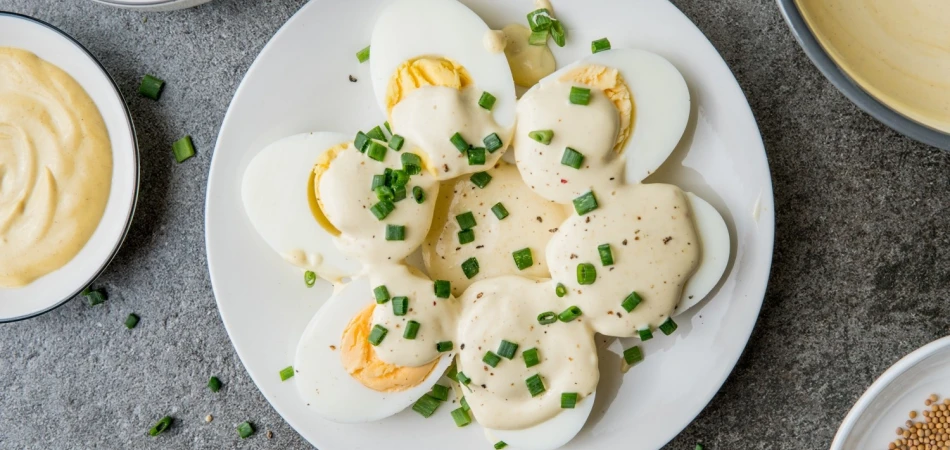
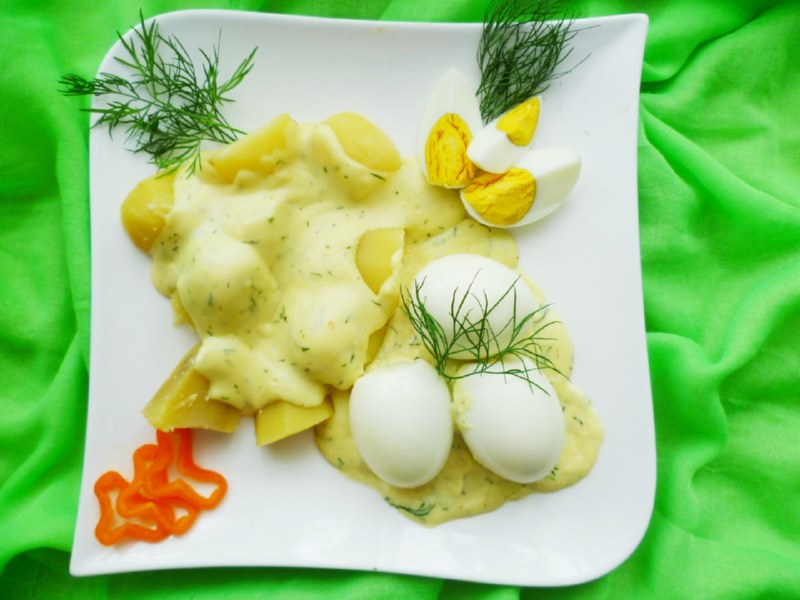
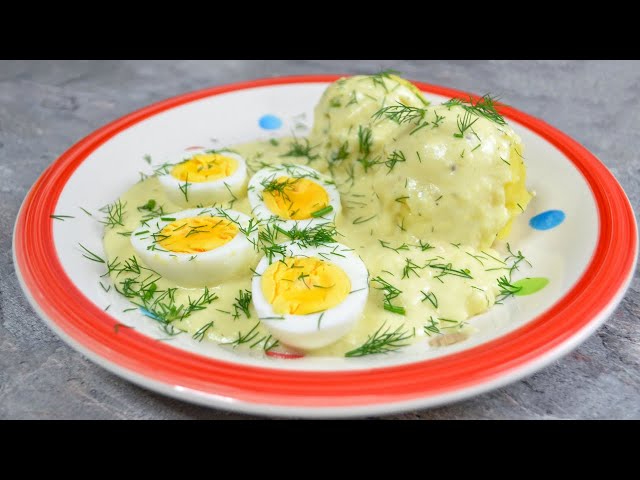
Eggs in mustard sauce was allegedly popular in communist times. Allegedly coz I don`t remember it to be so. I tried it a few times as a child and that`s all. It wasn`t once a week dish, certainly.
Ingredients: 8 eggs 2 cups of vegetable broth 2 small onions 6 tablespoons of mustard 4 tablespoons butter 2 tablespoons lemon juice 2 flat tablespoons of wheat flour salt and pepper to taste Preparation:
Boil the eggs until hard, cool, peel and cut in half. Chop the onion into very small cubes. Melt the butter and fry the onion in it. Add the flour and stir so that no lumps form. Pour in the broth and lemon juice, stir until combined. Add the mustard and season to taste. Stir, bring to a boil and cook over medium heat for about five minutes. Place the eggs on plates and pour the mustard sauce on the side. You can decorate the dish with chopped parsley or other "greenery". Serve as a snack or a dish, accompanied by e.g. mashed potatoes.
Here are two versions: solo and as a dish with potatoes and salads
Eggs in mustard sauce was allegedly popular in communist times
Not sure if I heard of that, but I like eggs in horseradish sauce. Weirdly I like horseradish in Poland but nowhere else... I'd always hated it before living in Poland and I don't like it in any other country but Polish horseradish, I like.
Eggs in mustard sauce was allegedly popular in communist times.
We have/had something very similar in the U.K. in roughly the same period; it had a sort of a 50s/60s feel to it. Not popular nowadays and I never liked it.
Of course. Political correctness in countries like Britain forbids stronger tastes. I experienced it in the US uni canteen 35 years ago. Marinated mushrooms tasted as if they had been soaked in pure water for a year.
Devilled eggs (in the US at least) don't use a sauce. The yolk is scraped out of hard boiled egg halves and then mixed with mustard and paprika (and/or other things) and then the mixture put back into the eggs. I used to love them but they're a lot of work, now I just smear some mustard (dijon is my favorite) on hardboiled eggs and sprinkle some paprika on top.....
The yolk is scraped out of hard boiled egg halves and then mixed with mustard and paprika (and/or other things) and then the mixture put back into the eggs.
It's the same over here too although I've known curry powder to be sometimes substituted for mustard. It was the closest thing I could think of when Jon said we had something similar in the UK. Very much a 70s/80s thing though, Haven't seen them for years and they weren't that popular.
Devilled eggs (in the US at least) don't use a sauce
There's an overlap between devilled eggs and the more 60s suburban egg mayonnaise. Half a boiled egg slathered with mayonnaise flavoured with Dijon mustard. Real mayonnaise so a little runnier than bottled.
We never had them at home, though I'd eaten them at other houses. I'd have one out of politeness (being happy if I never ever saw an egg, except maybe poached once in a blue moon).
Very much a 70s/80s thing though
It's time for a 70s and 80s food revival. Not just stuff like arctic rolls but tinned salmon instead of tuna (a much better product) and things like chicken Maryland or for an ultra special occasion Tournedos Rossini.
My late ex was a few years older than me and used to cook in a 70s way, mackerel pate and toast etc. I learnt from Delia Smith so am sort of a bit stuck in the 80s. Her recipes always work though.

I don't know if I could even eat the sort of food that people ate back then these days. I remember having tinned salmon with parsley sauce on the top ( packet mix back then ). Tournedos Rossini! You might have moved in better circles than me......
I actually liked Findus crispy pancakes of all things. Don't know if you can even get them anymore. Vesta curries!
Those thrilling choices for a meal out too! Either melon balls or prawn cocktail for starters, steak for mains and black forest gateau for dessert. At a Berni Inn of course.
Delia Smith
Never made anything from her recipes although she's hugely popular even today. I learnt to cook from the age of 8 out of necessity. Used an old book called 1000 recipes byJane Harrop, Isabelle Barrett. Nothing too exciting in it but good for basics.
Home / Food / Polish cookbook - down to earth hearty Polish cuisine